1. PRODUCT SUMMARY
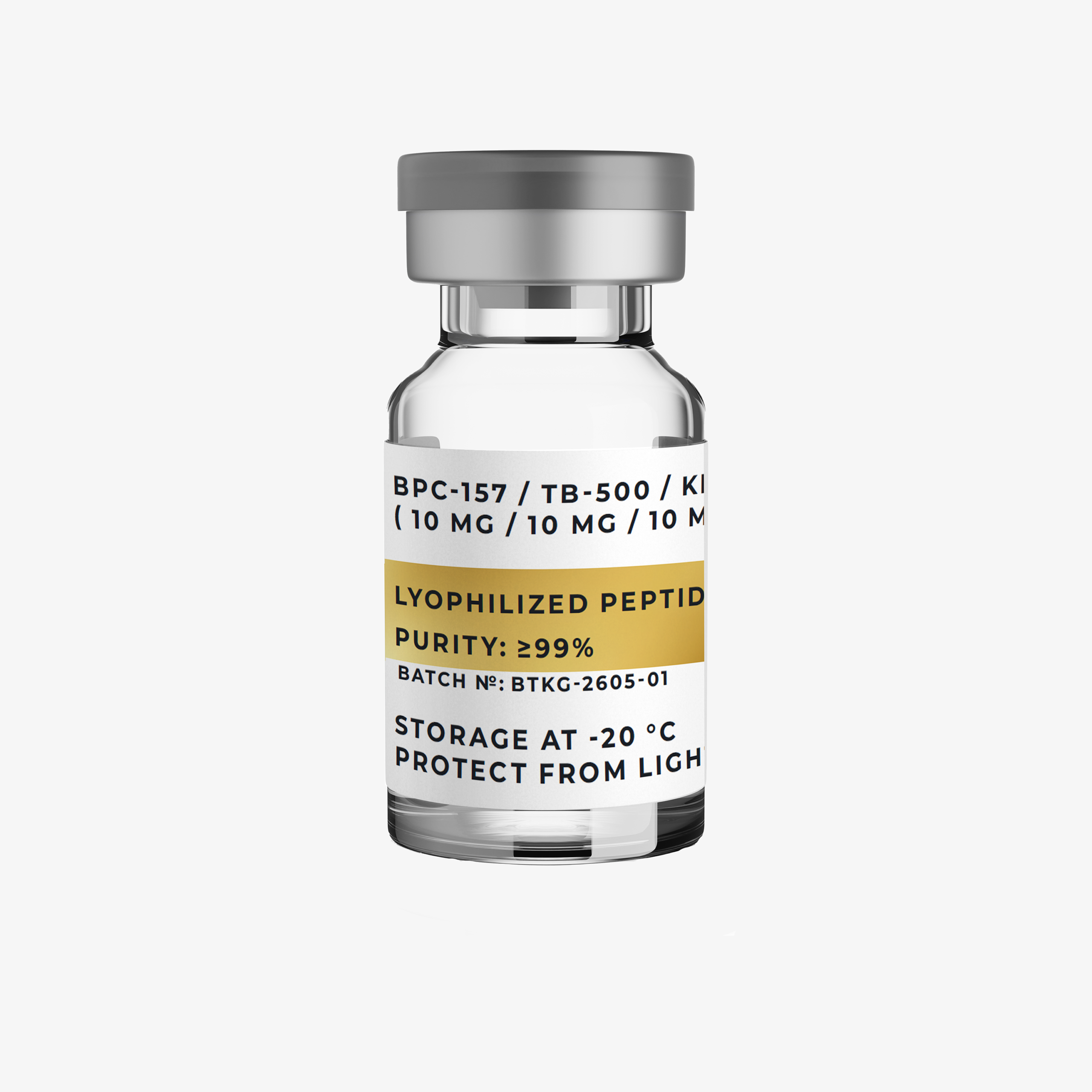
This blend is a sophisticated research formulation combining four potent signaling peptides: BPC-157, TB-500, GHK-Cu, and KPV. This combination is specifically designed to evaluate the intersection of rapid tissue repair and immunological regulation. By integrating a potent anti-inflammatory tripeptide (KPV) with established regenerative factors, the blend serves as an advanced platform for studying wound healing kinetics, muscle recovery, and cellular rejuvenation in preclinical assays.
2. STORAGE PROTOCOL
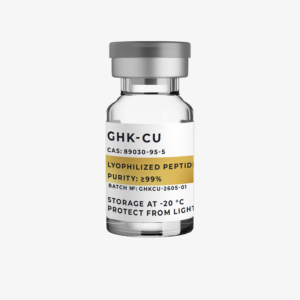
Lyophilized State: Maintain at -20°C (-4°F) for maximum stability. Protect from light.
Reconstituted Solution: Store at 2–8°C (36–46°F) post-reconstitution.
Stability Window: Use within 30 days of mixing to ensure experimental accuracy.
3. RESEARCH APPLICATIONS
Advanced Tissue Regeneration: Examining synergistic cellular repair across multiple tissue types.
Immunological Modulation: Studying the role of KPV in balancing immune responses during the recovery phase.
Angiogenesis & Matrix Remodeling: Investigating the formation of new vasculature and collagen deposition.
Anti-Inflammatory Kinetics: Mapping the engagement of pathways responsible for reducing systemic and localized inflammation.
4. REGULATORY DISCLAIMER
NOTICE: This formulation is supplied exclusively for academic and laboratory research and development. It is STRICTLY NOT FOR HUMAN CONSUMPTION, nor is it intended for therapeutic or diagnostic use. Handling must be restricted to qualified scientific professionals in controlled laboratory environments. This product is not designed to diagnose, treat, or prevent any medical condition.
5. REFERENCES
- Regenerative and protective actions of the GHK-Cu peptide in human tissue
https://pubmed.ncbi.nlm.nih.gov/29986520 - GHK peptide as a natural modulator of multiple cellular processes
https://pmc.ncbi.nlm.nih.gov/articles/PMC4508379 - Stimulation of collagen synthesis by GHK-Cu in fibroblast cultures
https://www.sciencedirect.com/science/article/pii/001457938880509X - The human tripeptide GHK-Cu in prevention of oxidative stress and healing
https://pmc.ncbi.nlm.nih.gov/articles/PMC3359723 - Copper tripeptide effects on wound healing in animal models
https://pubmed.ncbi.nlm.nih.gov/23744835 - Stable Gastric Pentadecapeptide BPC 157 and Wound Healing
https://pmc.ncbi.nlm.nih.gov/articles/PMC8275860 - Pentadecapeptide BPC 157 Enhances Healing and Tendon Repair
https://pubmed.ncbi.nlm.nih.gov/21030672 - Impact of Pentadecapeptide BPC 157 on Muscle Healing
https://pubmed.ncbi.nlm.nih.gov/20190676 - Emerging Use of BPC 157 in Orthopaedic Sports Medicine
https://pubmed.ncbi.nlm.nih.gov/40756949 - Utilizing Developmentally Essential Secreted Peptides Such as Thymosin β4
https://pmc.ncbi.nlm.nih.gov/articles/PMC8228050 - Thymosin β4 Accelerates Wound Healing
https://pubmed.ncbi.nlm.nih.gov/10469335 - PepT1-Mediated Tripeptide KPV Uptake Reduces Intestinal Inflammation
https://www.researchgate.net/publication/5787378_PepT1-Mediated_Tripeptide_KPV_Uptake_Reduces_Intestinal_Inflammation - Are melanocortin peptides future therapeutics for cutaneous wounds and skin ulcers
https://pubmed.ncbi.nlm.nih.gov/30661264/ - Transdermal Iontophoretic Delivery of Lysine-Proline-Valine (KPV)
https://www.sciencedirect.com/science/article/abs/pii/S0022354917301740
Reviews
There are no reviews yet.