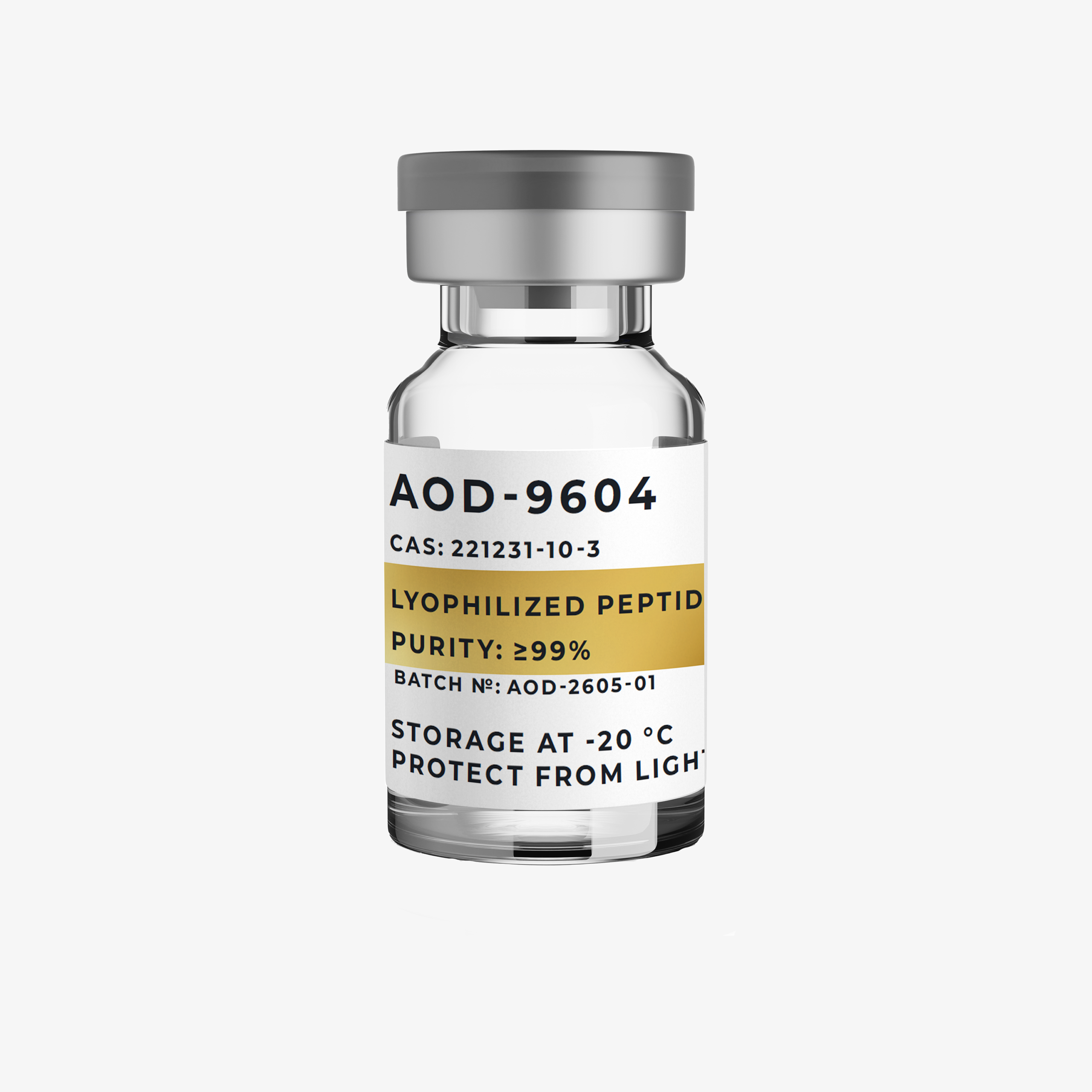
1. PRODUCT OVERVIEW
AOD-9604 is a synthetic peptide fragment derived from the C-terminus of Human Growth Hormone (hGH), specifically encompassing amino acids 176–191.4 It is primarily utilized in metabolic research to investigate targeted lipolytic pathways. Scientific interest in AOD-9604 stems from its potential to facilitate adipose tissue breakdown without triggering the diabetogenic effects or IGF-1 elevation typically associated with the full-length growth hormone molecule. AOD-9604 is widely used in scientific research to investigate metabolic pathways related to lipid metabolism and energy regulation.
2. STORAGE & HANDLING PROTOCOL
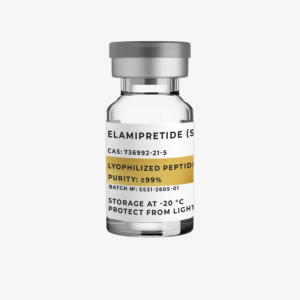
Long-term Storage: Maintain the lyophilized powder at -20°C (-4°F). Ensure the vial remains sealed and protected from light.
Post-Reconstitution: Reconstitute with sterile diluent. Store the resulting solution at 2–8°C (36–46°F).
Stability: For maximum experimental integrity, utilize the reconstituted product within 30 days. Avoid vigorous mechanical agitation.
3. POTENTIAL RESEARCH APPLICATIONS
Lipolysis & Fat Metabolism: Investigating signaling pathways responsible for triglyceride degradation in white adipose tissue.
Weight Management Models: Studying the effects of the 176–191 fragment on body composition and adiposity in vivo.
Metabolic Rate Studies: Evaluating the compound’s impact on energy expenditure and basal metabolic regulation.
Safety Profiling: Mechanistic studies focused on the decoupling of lipolytic action from glucose metabolism interference.
4. REGULATORY DISCLAIMER
NOTICE: This product is supplied strictly FOR LABORATORY RESEARCH and development purposes. It is NOT FOR HUMAN CONSUMPTION, therapeutic, or diagnostic use. This material must be handled by qualified scientific professionals in a controlled environment.
5. REFERENCES
- Metabolic studies of a synthetic lipolytic domain (AOD9604)
https://pubmed.ncbi.nlm.nih.gov/11146367/ - The effects of human GH and its lipolytic fragment (AOD9604) on lipid metabolism
https://pubmed.ncbi.nlm.nih.gov/11713213/ - Increase of fat oxidation and weight loss in obese mice treated with AOD9604
https://pubmed.ncbi.nlm.nih.gov/11673763/ - Obesity Pharmacotherapy: Current Perspectives and Future Directions
https://pmc.ncbi.nlm.nih.gov/articles/PMC3584306/ - Obesity drugs in clinical development
https://pubmed.ncbi.nlm.nih.gov/16625817/ - AOD9604: development of a GH fragment for the treatment of obesity
https://pubmed.ncbi.nlm.nih.gov/15134286/ - Detection and in vitro metabolism of AOD9604
https://pubmed.ncbi.nlm.nih.gov/25208511/ - Safety and Metabolism of AOD9604, a Novel Nutraceutical
https://jofem.org/index.php/jofem/article/view/213/278 - Effect of intra-articular injection of AOD9604 on cartilage regeneration
https://pubmed.ncbi.nlm.nih.gov/26275694/ - Potential role of new therapies in modifying cardiovascular risk
https://pubmed.ncbi.nlm.nih.gov/16931496/
Reviews
There are no reviews yet.